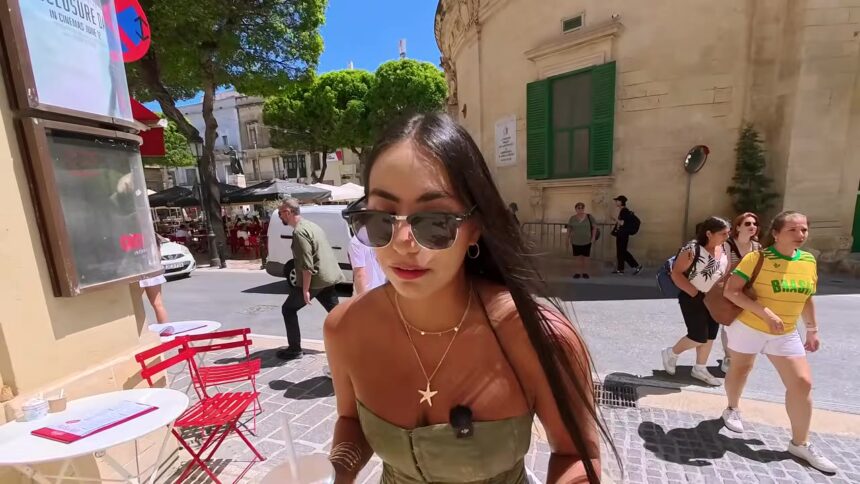
An authentic Mexican culture travel experience begins when you slow down, eat where people eat, use the city with care, and treat daily routines as the main attraction. Mexico City is an especially rewarding place to do this: its markets, small eateries, public transport, parks, family-run businesses and neighborhood plazas reveal far more than a checklist of famous sights. This guide turns the spirit of Viajando con Vero’s 24-hour local experience into a respectful, practical plan you can follow yourself.
What Viajando con Vero’s journey shows
- She begins by stepping into a Mexican friend’s everyday rhythm rather than following a standard tourist schedule.
- The journey uses typical Mexican food as a way to understand habits, flavors and the social side of sharing a meal.
- It mixes ordinary routines with time spent out in Mexico City, showing that local life and landmark-filled streets naturally overlap.
- The video focuses on conversation, curiosity and small cultural differences that visitors may notice when spending time with residents.
- It ends as a personal test of whether adapting to daily life in Mexico could feel natural, rather than presenting Mexico as a performance for tourists.
Watch the original journey first, then use the practical ideas below to create your own version with patience and respect.
How to get there and move around Mexico City
For most international visitors, Mexico City International Airport is the simplest arrival point. Before flying, check your personal entry rules directly with Mexico’s immigration authority. Visitors arriving by air do not complete a paper FMM; the Instituto Nacional de Migración states that the digital record can be downloaded after entry, during the stay granted by the immigration officer.
Once in the city, do not try to cover every district in one day. Mexico City is vast, and the city tourism office specifically advises allowing extra time for its distances. Buy a rechargeable Integrated Mobility card and use the Metro or Metrobús outside the busiest rush-hour periods if you are comfortable navigating independently. The Metro normally operates from 5 a.m. to midnight on weekdays, with later morning starts at weekends.
For a first visit, base your walks around one connected area at a time: Centro Histórico, Coyoacán, Roma/Condesa, or San Ángel. For broader planning advice before arrival, read our Mexico travel tips for foreigners.
Best time for an authentic Mexican culture travel experience
Mexico City works year-round, but October through April is generally the easiest period for long neighborhood walks because it is the drier season. The city tourism guide identifies November through February as cooler months, while rain is more frequent from roughly May or June through September, often arriving as strong afternoon showers.
March to May can bring sunny days but warmer afternoons. September through early November offers a powerful cultural calendar, including Independence Day observances and Day of the Dead traditions, but book accommodation early and remember that these occasions are meaningful community events, not costumes or photo backdrops. If you visit during the rainy season, start outdoor plans in the morning and keep an indoor museum, café or market nearby for the afternoon.
What it costs in 2026
Food, hotels and guided activities vary sharply by neighborhood and season, so it is better to set your own daily budget than rely on a misleading “average.” The fixed public-transport fares below are useful anchors for a lower-cost, local-style day.
| Item | Verified 2026 price | Useful note |
|---|---|---|
| Mexico City Metro | MX$5 per trip | The fare is the same regardless of distance and includes internal Metro transfers. |
| Metrobús | MX$6 per trip | Transfers between Metrobús lines are free within two hours when travelling in one direction. |
| Metrobús airport service | MX$30 per trip | Line 4 serves Mexico City International Airport terminals. |
The Metro fare remains MX$5, while the official Metrobús payment page lists MX$6 for a standard journey and MX$30 for the airport service. Carry small notes and coins for card top-ups, and always check the current route map or service notices before setting out.
Where to stay
Choose a neighborhood that lets you participate in daily life without treating residential streets as an attraction. Roma Norte and Condesa are convenient for first-time visitors who want walkable cafés, parks and easy transport. Coyoacán suits travelers seeking slower mornings, traditional markets and a more village-like rhythm. Centro Histórico is best for early access to major civic spaces, but it is busier and less restful at night.
Wherever you stay, greet reception staff, shopkeepers and neighbors with a simple “buenos días” or “buenas tardes.” It is a small gesture, but it changes the tone of everyday interactions. If you later continue beyond the capital, our guide to San Miguel de Allende offers a different perspective on Mexican urban life and heritage.
Everyday activities, etiquette and safety tips
Build your day around normal places: have breakfast at a busy neighborhood café or market stall, order a comida corrida at lunchtime, browse a produce market, sit in a park, and choose one family-run restaurant for dinner. Ask before photographing people, vendors, religious spaces or altars. Learn the name of a dish before assuming what is in it, and be clear about dietary needs; “sin picante” means no chili, but it does not necessarily mean a dish will have no flavor.
Public transport is part of local life, but use common sense. Keep your phone and wallet secure, avoid displaying valuables, and do not hail taxis on the street. The U.S. State Department advises using trusted ride-share apps, an authorized taxi stand, or a taxi arranged by your hotel, and recommends confirming the vehicle and plate before getting in. Mexico’s overall advisory was Level 2, “Exercise Increased Caution,” as of May 29, 2026; check the latest official guidance for your nationality before departure.
A meaningful cultural experience does not require entering private homes or seeking “hidden” neighborhoods. Spend money with local businesses, listen more than you speak, and accept that there is no single way to be Mexican. Mexico is regional, multilingual and varied. For a future journey through the southeast, see our Maya Train Mexico guide.
Day-by-day (how to travel it yourself)
Day 1: Learn the rhythm. Start with breakfast in the neighborhood where you are staying, then take public transport to one nearby market. Buy fruit or a simple snack, practice a few Spanish greetings, and eat lunch at a busy fonda serving a fixed-menu comida corrida. Spend the afternoon walking one district slowly: notice bakeries, schools, small shops, street vendors and the way people use public squares. End with dinner at a restaurant that specializes in a regional Mexican cuisine rather than an international chain.
Day 2: Add context. Visit one major cultural site in the morning, then balance it with an ordinary activity: coffee at a local café, a park visit, a bookstore, a craft market or a neighborhood food tour led by a resident. Leave enough time to return to your accommodation before late evening. The goal is not to “live like a local” in 48 hours, but to travel with more attention, humility and connection.
Frequently asked questions
Can visitors really experience everyday Mexican culture in Mexico City?
Yes, if you focus on ordinary routines rather than trying to access private life. Eat at local businesses, use public spaces respectfully, learn basic Spanish and allow time for one neighborhood at a time.
Is Mexico City suitable for a first trip to Mexico?
Yes. It has extensive transport, a huge range of accommodation and food, and many cultural options. Plan your routes carefully, stay aware of your belongings and use authorized or app-booked transport at night.
Do I need to speak Spanish?
No, but basic Spanish makes everyday interactions easier and more respectful. Learn greetings, numbers, “please,” “thank you,” and how to explain any food allergies before you arrive.
What should I avoid doing?
Avoid treating residents, religious traditions and markets as props for social media. Ask before taking photographs, do not make assumptions about food or identity, and do not enter unfamiliar areas simply because they are described as “authentic.”
Facts and prices verified in August 2026. Travel with Influencers is an independent fan/editorial guide, not affiliated with or endorsed by the creators featured. Watch and support the original creator: Viajando con Vero on YouTube.