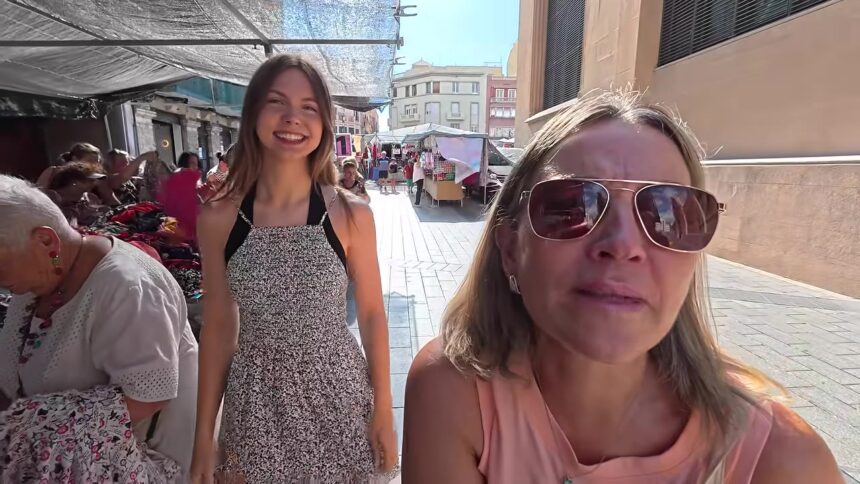
Spain travel expectations reality is simple: expect an enjoyable, sociable and easy-to-navigate country, but do not expect every city to feel cheap, quiet or built around a visitor’s timetable. Spain rewards travelers who slow down, book major sights early and treat daily routines—late meals, neighborhood shopping and long café stops—as part of the trip rather than an inconvenience. This guide turns those first impressions into practical planning advice, covering arrival logistics, realistic fixed costs, accommodation choices, safety and a flexible one-week route.
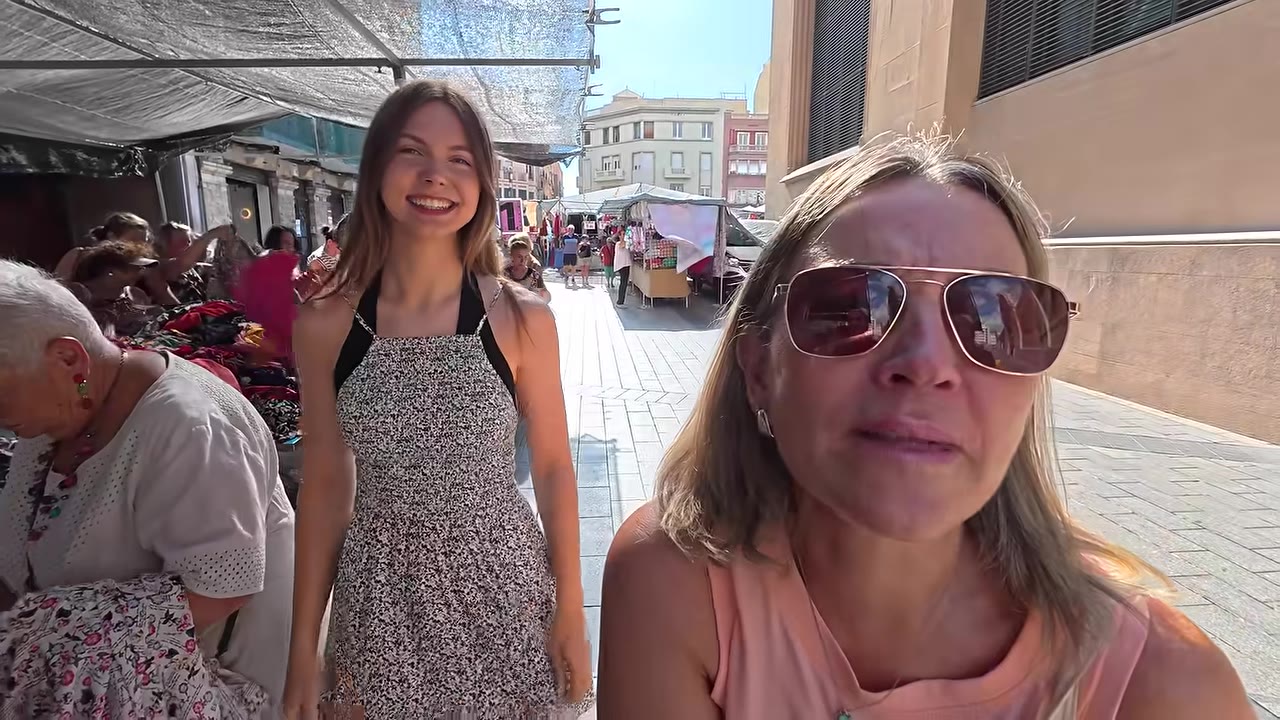
What Mateo & Lisanna’s journey shows
- They arrive in Spain and begin with a family reunion, a reminder that Spain is often experienced through home life and relationships as much as sightseeing.
- They take a local bus to a street market, showing a practical, ordinary side of getting around rather than a polished tourist itinerary.
- They browse clothing stalls and shops, where browsing, comparing and chatting can be part of the experience.
- They stop for coffee, illustrating the small pauses that shape the Spanish daily rhythm.
- They look at supermarket coupons, then visit a new home and balcony—useful scenes for understanding that Spain can feel residential, practical and less “holiday set” than visitors may imagine.
Watch Mateo & Lisanna’s video first, then use the planning notes below to build a trip that leaves room for the everyday moments.
How to get to and around Spain
For a first visit, fly into Madrid or Barcelona and resist the temptation to cover the entire country in a few days. Both are strong transport hubs; Madrid is especially convenient for rail connections across the interior, while Barcelona works well for Catalonia and the Mediterranean coast. If you land at Madrid-Barajas, the official Airport Express Shuttle links the airport with central stops including Atocha and Cibeles. The published single fare is €5.10, and the service runs through the night at a reduced frequency.
Spain’s high-speed rail network can make city-to-city travel easier than renting a car, particularly for Madrid, Barcelona, Seville, Córdoba, Málaga and Valencia. Fares are demand-based, so buy intercity tickets once your route is firm instead of relying on a fixed “typical” price. Renfe has advertised Madrid–Barcelona fares from €35 in 2026 promotions, but sale fares are limited and date-specific; treat them as a possible low end, not a guaranteed budget.
Use local buses and metro systems inside cities, but allow extra time for transfers, stairs and the walk from a station to your accommodation. In smaller towns, walking is usually the real transport plan. A car is most useful for rural Andalucía, mountain villages, wine regions or a flexible coastal road trip—not for central Madrid or Barcelona.
Best time to visit for a more realistic Spain
April to June and late September to October are the easiest broad windows for a first Spain trip: cities are active, daylight is generous and you are less likely to plan every afternoon around intense heat. That does not mean every region feels the same. Northern Spain can be cooler and wetter, while inland cities and Andalucía can be very hot in summer.
July and August are best if beaches, festivals and late nights are your priorities, but they are not automatically the best months for a multi-city sightseeing trip. Expect higher demand in major destinations, busy transport corridors and a different daily rhythm: early starts, a long midday break and evening activities. Winter can be excellent for Madrid, Seville, Málaga and museums, although mountain areas and northern regions need warmer, wetter-weather planning.
Spain also has regional identities, languages and public holidays that can change the feel of a trip from one city to the next. Build in one unscheduled evening per stop. It is the simplest way to make room for a neighborhood meal, market visit or local event you discover after arriving.
What Spain costs in 2026
Accommodation, meals and train tickets vary sharply by city, season and booking lead time, so avoid building a budget around a single national daily figure. Instead, price the non-negotiable items first: your room, long-distance travel and major attractions. The verified examples below are useful anchors, not a complete trip budget.
| Item | Verified 2026 price | Planning note |
|---|---|---|
| Madrid Airport Express Shuttle | €5.10 one way | Airport-to-city transport option; contactless payment is accepted on board. |
| Museo del Prado general admission | €15 | Check the museum’s official timetable and eligibility rules before choosing a free-entry period. |
| Alhambra General day visit | €22.27 | Includes the Nasrid Palaces, Alcazaba and Generalife; the palace entry time on the ticket matters. |
The Prado lists general admission at €15, while the official Alhambra ticket site lists the full General day visit at €22.27. For food, do not assume tapas are always free or that a low menu price includes every extra. Read the menu, ask whether bread or a cover charge applies, and keep a little flexibility for the restaurant that looks busiest with local diners.
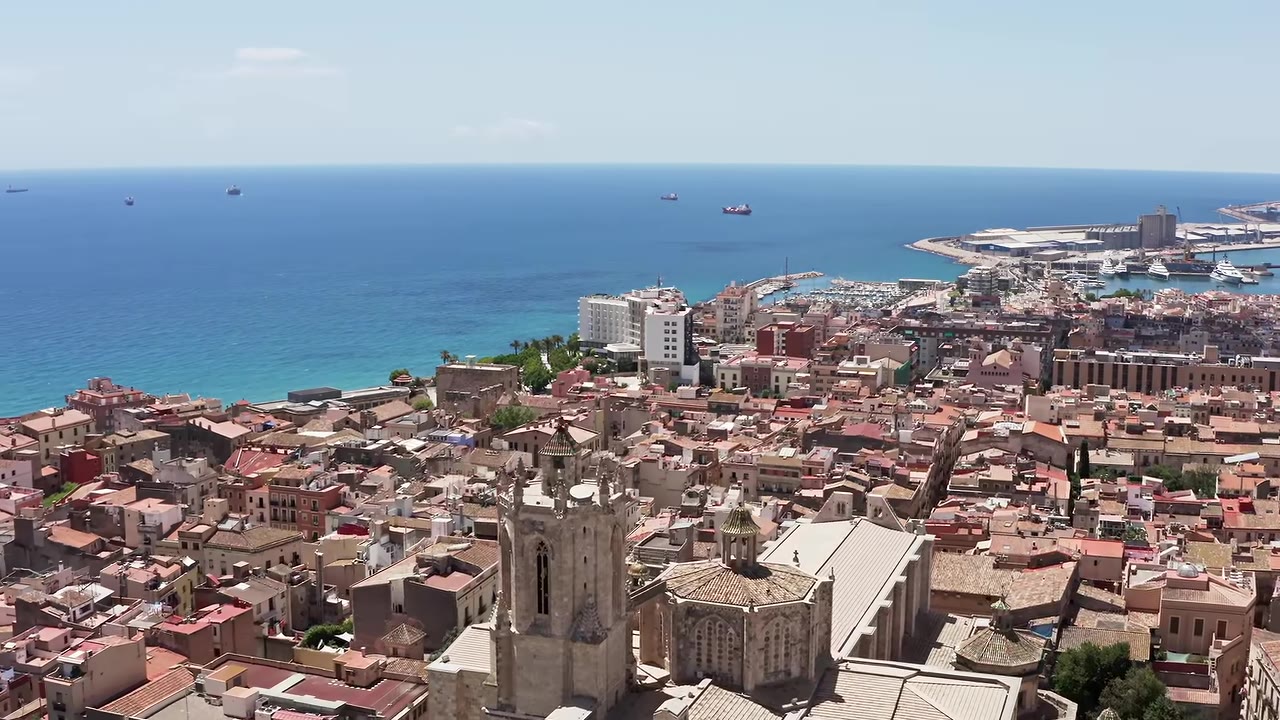
Where to stay: choose a neighborhood, not only a landmark
For a first-time city break, stay near a metro or rail connection but outside the loudest nightlife streets. In Madrid, this can mean choosing a residential area within easy reach of the center rather than insisting on Puerta del Sol. In Barcelona, confirm exactly where your accommodation sits in relation to the sights you want to see, because the city is walkable in sections but larger than it first appears. Our Barcelona travel guide explains the city’s practical differences in more detail.
Apartment stays can be appealing for kitchens and local-market shopping, but check the legal listing details, cleaning fees, lift access and late-arrival process before booking. A hotel can be easier for short stays, especially when you arrive by train and want luggage storage. On a southern itinerary, compare city-center bases with coastal stops using our Marbella guide before committing to a resort-style stay.
Safety, culture and small things that prevent frustration
Spain is not a place to visit fearfully, but it does reward ordinary city awareness. Keep phones and wallets secure in crowded transit areas, markets and landmark queues; use a zipped cross-body bag rather than an open back pocket; and do not leave belongings unattended at café tables. As of August 1, 2026, the U.S. State Department advises travelers to exercise increased caution in Spain because of terrorism and unrest, and specifically advises avoiding demonstrations and crowds.
For non-EU visitors, check entry rules well before departure. Short Schengen stays are generally limited to 90 days in any 180-day period, and passports generally need to remain valid for at least three months after the intended EU departure date. The EU’s Entry/Exit System has been fully operational since April 10, 2026, so eligible non-EU short-stay visitors should expect biometric border processing.
Finally, adjust expectations around time. Lunch and dinner may be later than you are used to, shops can keep local hours, and an apparently quiet street at 6 p.m. may become lively after 9 p.m. That is not poor service or a lack of things to do; it is the rhythm you came to experience.
Day-by-day (how to travel it yourself)
Days 1–3: Madrid. Arrive, use the first afternoon for a gentle neighborhood walk and coffee, then dedicate one full day to the Prado and Retiro area. On day three, take a high-speed train south or east. Do not pack several museums into the arrival day.
Days 4–5: Seville or Granada. Choose Seville for street life, architecture and a larger city feel; choose Granada for the Alhambra and Albaicín views. If Granada is your choice, book the Alhambra first and shape the rest of the day around its timed palace entry. For more route inspiration, see our guide to the best things to do in Ronda if you can add an Andalucía stop.
Days 6–7: Barcelona or a slower finish. Fly or take the train to Barcelona for a contrasting Mediterranean city finale, or spend the last two days in one region instead of adding another long transfer. Plan one market, one café stop and one unstructured neighborhood walk alongside the famous sights.
Activities work best when you pre-book only the timed, high-demand essentials and leave the rest open for the everyday Spain shown in the video: transport, coffee, shopping and conversations.
Frequently asked questions
Is Spain cheaper than travelers expect?
It can be good value, but major cities, beach destinations and peak summer dates are not automatically cheap. Book accommodation and long-distance transport early, then keep meals and local exploration flexible.
Do I need to speak Spanish to travel in Spain?
No, especially in major destinations, but a few greetings, food words and transport terms make everyday interactions easier and more respectful.
Should I rent a car for my first Spain trip?
Usually not for Madrid, Barcelona, Seville or Granada alone. Use rail and local transport for a city itinerary; rent only when your route includes smaller towns, countryside or less-connected coasts.
How far ahead should I book the Alhambra?
Book as soon as your Granada dates are fixed, especially for popular periods. Choose the official ticket carefully because the Nasrid Palaces have a specific entry time.
Facts and prices verified in September 2026. Travel with Influencers is an independent fan/editorial guide, not affiliated with or endorsed by the creators featured. Watch and support the original creator: Mateo & Lisanna on YouTube.