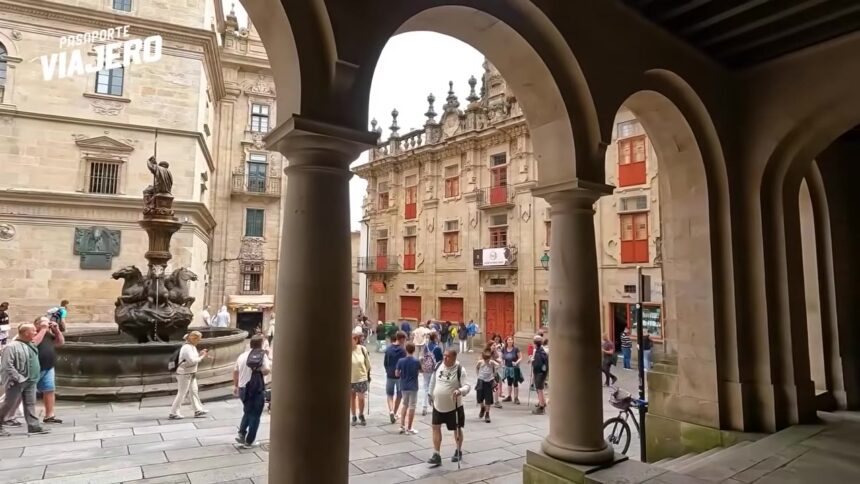
The best things to do in Santiago de Compostela are wonderfully easy to experience on foot: begin at the Cathedral and Praza do Obradoiro, then let the medieval lanes, markets, monasteries and green viewpoints shape the rest of your visit. This practical first-time guide explains how to reach the city, when to go, which paid cathedral experiences are worthwhile, and where to base yourself. It also gives you a simple itinerary that turns Pasaporte Viajero’s highlights into a relaxed, replicable stay.
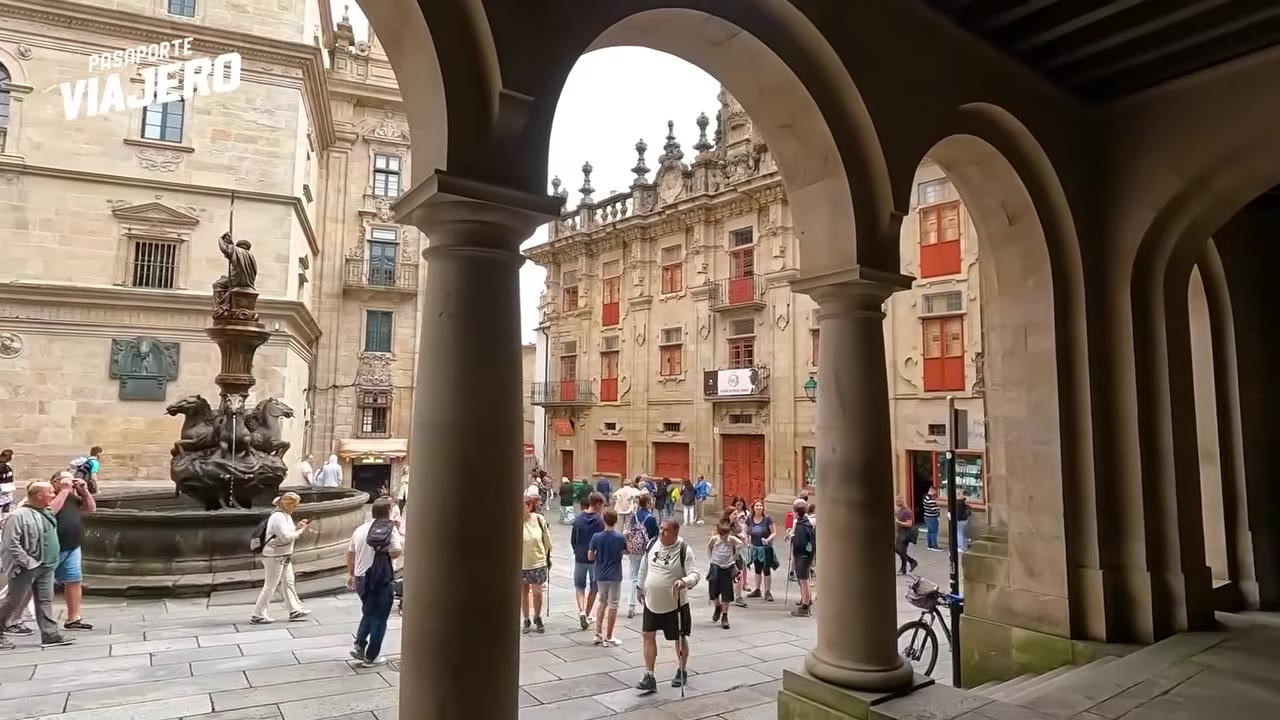
What Pasaporte Viajero’s journey shows
- The route opens in the grand cathedral quarter, with Praza do Obradoiro offering the essential first view of Santiago’s famous façade.
- It continues through the compact UNESCO-listed historic centre, where granite arcades, narrow streets and pilgrimage symbols make wandering part of the experience.
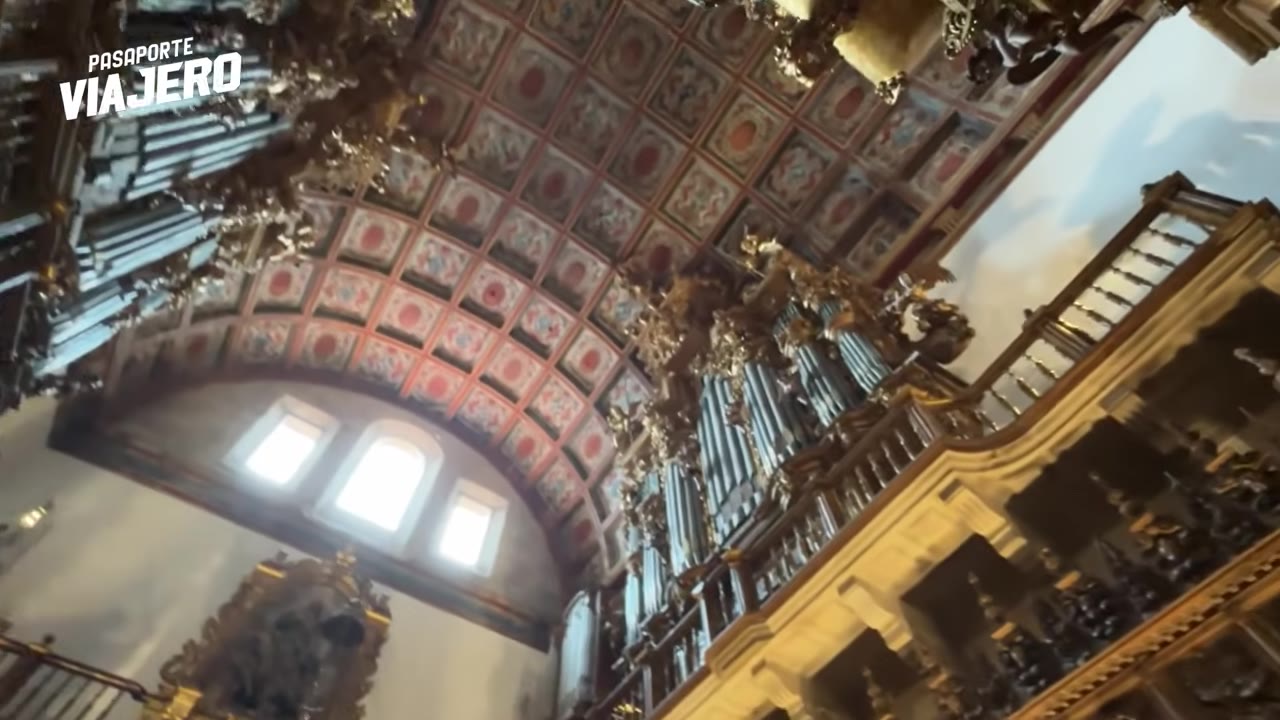
- The Cathedral of Santiago de Compostela remains the central stop, from its religious importance to the details around the Pórtico de la Gloria and adjoining museum spaces.
- The journey moves beyond the cathedral square to historic religious buildings, traditional streets and everyday corners that reveal the city’s atmosphere.
- It finishes with Santiago’s more relaxed side: viewpoints, parks and places to pause over Galician food after sightseeing.
Watch Pasaporte Viajero’s video first for a visual introduction, then use the practical details below to plan your own route.
How to get to Santiago de Compostela
Santiago-Rosalía de Castro Airport is the most convenient arrival point for international connections through other European cities and for domestic flights within Spain. Aena confirms that city bus line 6A links the airport with Santiago, while taxis wait outside the terminal. Check the operator timetable shortly before travel, especially for an early departure or late arrival.
From Madrid, the train is often the simplest low-stress option. Renfe runs long-distance and high-speed services to Santiago–Daniel Castelao station on Rúa do Hórreo, south of the Old Town. The station is walkable to the centre in around 20 minutes, though the uphill approach with luggage is less enjoyable in rain; take a taxi or local bus if you are staying near the cathedral. Renfe notes that the Madrid–Santiago route has high-speed and long-distance services, while the station itself is open from 4:30 am to 12:30 am.
A car is unnecessary if Santiago is your only destination. The historic core is best explored on foot, and driving or parking close to the cathedral is more trouble than it is worth. A rental car becomes useful only if you are adding rural Galicia, the Atlantic coast or a longer road trip; for another northern Spain idea, see our Cantabria travel guide.
Best time to visit
For the best balance of daylight, comfortable walking weather and manageable crowds, aim for late April to June or September to October. Summer brings long evenings and a lively pilgrim atmosphere, but the cathedral quarter can feel busy, particularly around religious celebrations and school holidays.
Rain is part of Santiago’s character rather than a reason to avoid it. Galicia’s Atlantic climate means showers can arrive at any time of year, so bring a waterproof layer and shoes with grip for polished stone streets. Winter is quieter and can be atmospheric, but plan shorter outdoor routes and reserve a central hotel so you can retreat easily between sights.
What it costs in 2026
The city’s great advantage is that its core pleasures cost little: wandering the Old Town, standing in Praza do Obradoiro, entering the basilica independently and walking through Alameda Park are all central experiences. Reserve paid cathedral spaces in advance if the Pórtico de la Gloria or rooftop access matters to you, because access is timed and can be affected by worship or institutional events.
| Item | Verified 2026 price | What to know |
|---|---|---|
| Cathedral basilica, independent visit | Free | No ticket is required for an individual visit to the basilica; use the entrance at Porta de Praterías. |
| Cathedral Museum complete visit | €23 general | Includes the museum collection, Pórtico de la Gloria with audio guide, rooftops and Torre de la Carraca, plus associated spaces. |
| Cathedral Museum complete visit, reduced fare | €19 | Available to eligible visitors including students, accredited pilgrims and visitors aged over 65, with proof required. |
| Pórtico de la Gloria guidebook | €5 | Sold through the Cathedral Museum visitor service. |
For a formal paid activity, the Cathedral Museum’s complete visit is the most comprehensive choice because it combines the main historic spaces rather than charging separate entry for each. The basilica itself remains free to enter independently, but remember that religious services take priority. The official visitor service advises booking up to 60 days ahead and notes that tickets cannot be changed or refunded.
Where to stay
For a first visit, stay in or immediately beside the Old Town. You will be able to reach the Cathedral, market, Alameda and most restaurants without transport, which matters when rain begins or you want to return to your room between sightseeing and dinner. Look around Praza de Galicia, Rúa do Vilar, Rúa Nova and the streets between the cathedral and Mercado de Abastos.
Choose the area around the Intermodal Station or Rúa do Hórreo if you arrive by train, have an early departure, or prefer modern hotels with easier vehicle access. It is still close enough to walk to the centre. Budget travellers can consider hostels around the historic core, but check whether rooms face late-night streets; Santiago is sociable, and sound can carry through older buildings.
If you are combining Santiago with Spain’s larger cities, our guide to living in Madrid can help you understand the capital before or after the train journey north.
Useful safety and visit tips
Santiago is generally straightforward for independent visitors, but treat it as a busy European visitor centre: keep phones and wallets secured in crowds around the cathedral, at the station and in popular bars. The bigger practical risk is weather. Wet granite becomes slippery, especially on slopes and stairways, so avoid smooth-soled shoes.
Dress respectfully for the cathedral and do not plan a museum visit too tightly around Mass or major religious dates. The Cathedral says the basilica is open daily from 7 am to 9 pm, while museum hours and access to specific spaces can vary; backpacks are not permitted inside the temple.
Travellers who need cover for delayed connections, medical care or lost luggage should also read our guide to choosing Schengen travel insurance for Europe before departure.
Day-by-day (how to travel it yourself)
Day 1: Cathedral and the historic core. Start early at Praza do Obradoiro, then walk around the Cathedral exterior to Praza das Praterías and Praza da Quintana. Enter the basilica, then follow Rúa do Vilar and Rúa Nova at an unhurried pace. Stop at Mercado de Abastos for a casual lunch, and spend the afternoon at the Cathedral Museum if you have booked it. Finish in Alameda Park for a broad view back toward the cathedral towers.
Day 2: Monasteries, local streets and green Santiago. Walk north to San Martiño Pinario and the streets around Praza da Inmaculada, then continue toward the quieter lanes near San Francisco. After coffee, explore the Bonaval area and its park, where the city feels less ceremonial and more local. Keep the evening free for a long Galician meal near the market or in the Old Town.
Optional extra day: Slow down rather than adding too many museums. Revisit the cathedral quarter in different light, attend Mass if that is meaningful to you, or use Santiago as a base for a guided excursion into Galicia’s coast and villages.
Frequently asked questions
How many days do you need in Santiago de Compostela?
Two days is ideal for a first visit: one for the cathedral area and Old Town, and one for parks, monasteries, food and a slower walk through the surrounding neighbourhoods.
Is Santiago de Compostela walkable?
Yes. The main sights are concentrated in and around the historic centre. Expect cobbles, slopes and occasional steps, so use supportive shoes and allow extra time if mobility is limited.
Do you need to book Santiago Cathedral in advance?
You do not need a ticket to enter the basilica independently, but book ahead for timed museum, rooftop or Pórtico de la Gloria experiences, particularly in busy months.
Is one night enough in Santiago de Compostela?
One night is enough to see the cathedral and enjoy an evening in the Old Town, but two nights make the experience much more relaxed and allow for rain, timed entries and a proper Galician meal.
Facts and prices verified in November 2026. Travel with Influencers is an independent fan/editorial guide, not affiliated with or endorsed by the creators featured. Watch and support the original creator: Pasaporte Viajero on YouTube.