The best volcanic beaches in Santorini Greece are worth adding to your trip if you want dramatic geology, clear swimming water and a quieter contrast to the caldera villages—but do not expect wide stretches of soft golden sand. Santorini’s shore is shaped by the island’s volcanic history, so its beaches range from red cliffs and dark pebbles to black-sand resort strips. This guide explains which beaches deserve your time, how to reach them, what verified 2026 transport and admission costs look like, and how to build them into a practical Santorini itinerary.
What Michelle Thielen’s journey shows
- She uses Santorini as more than an Oia-and-sunset destination, beginning from an island stay in Oia and moving beyond the caldera.
- The journey shifts from the whitewashed villages and elevated viewpoints to Santorini’s striking volcanic coastline.
- Her beach-focused route highlights the visual difference between the island’s dark volcanic shores and the red-toned coast near Akrotiri.
- The video makes the useful point that Santorini’s beaches are an experience of landscape and geology, rather than a conventional beach-resort holiday.
- It offers a good starting point for travelers deciding whether to devote a full day of a short Santorini visit to the southern and eastern coast.
Watch Michelle Thielen’s Santorini beach journey before planning your own route:
Why Santorini’s volcanic beaches are different
Santorini is the exposed rim of a volcanic caldera, and its beaches are part of that story. The south and east coasts trade the caldera’s sheer cliffs for dark sand, smooth black pebbles, layered rock and, at Red Beach, an unmistakable rust-red cliff backdrop. The island municipality highlights Vlychada, Kamari, Perissa and Perivolos among Santorini’s principal beach areas.
For the strongest one-day combination, pair Red Beach with Vlychada and then choose either Perissa or Kamari for a longer swim and lunch. Red Beach is the most photogenic stop; Vlychada feels more sculptural and less built-up; Perissa and Kamari are the easiest choices for sunbeds, restaurants and an all-afternoon beach base.
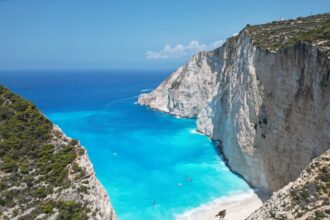
Do not judge them by the standards of a pale, powdery-sand beach. Dark sand and pebbles can be hot underfoot, the seabed can be stony, and the draw is the setting. If your Greece route is centered on classic soft-sand swimming, compare Santorini with the Ionian coast in our guide to Navagio Beach, Zakynthos.
How to get to Santorini and reach the beaches
Arrive by air at Santorini Airport (JTR) or by ferry at Athinios port. The airport is on the eastern side of the island, about 6 km southeast of Fira, while the ferry port sits below the caldera on the west coast. Flights and ferry timetables change by season, so book the transport first and build beach days around the confirmed arrival time rather than assuming a same-day itinerary will work.
Once on the island, Fira is the public-bus hub. KTEL Santorini publishes routes and fares for connections from Fira toward the airport, Kamari, Perissa, Akrotiri and other villages. This makes Fira or Firostefani a practical base if you do not plan to rent a vehicle. For Red Beach and Vlychada especially, a rental car, scooter or pre-arranged driver gives more flexibility than buses; drive carefully on narrow roads and never assume parking will be easy in high season.
A useful route is Fira to Akrotiri in the morning, followed by Red Beach, Vlychada and Perissa. The direct distances are short, but beach hopping still takes time because the island roads are winding and the coast is not served by a single continuous bus line.
Best time for Santorini’s beach coast
For the best balance of warm water, beach weather and manageable crowds, choose late May to June or September to early October. July and August bring the hottest weather and the busiest roads, restaurants and beach areas. September is especially appealing for travelers who want summer swimming conditions without the peak-season intensity.
Visit Red Beach early in the day for clearer light and a calmer experience, then move to Perissa or Kamari when you want shade, food and facilities. In spring and autumn, check wind conditions before committing to a boat trip: the exposed Aegean can be rough even when the sky is bright.
What Santorini volcanic beaches cost in 2026
The beaches themselves can be visited without an admission ticket. Rather than present unreliable hotel, taxi, ferry or restaurant averages, which change sharply by date and demand, these are the fixed public prices that can be verified for a beach-focused Santorini itinerary.
| Item | Verified 2026 price | Useful for |
|---|---|---|
| Fira–Airport KTEL bus | €2.20 one way | Reaching the island’s transport hub from JTR |
| Akrotiri of Thera archaeological site | €20 full admission | Adding Santorini’s major prehistoric site before Red Beach |
| Ancient Thera | €10 full admission | Combining history with Kamari or Perissa |
| Fira old-port cable car | €10 one way | Returning from the old port to Fira |
The Hellenic Ministry of Culture lists Akrotiri at €20 and Ancient Thera at €10 for summer 2026; Akrotiri is closed on Tuesdays, while Ancient Thera is closed on Wednesdays. The official cable-car tariff lists a €10 general one-way fare. Reconfirm seasonal hours before setting out.
Where to stay for a beach-and-caldera trip
Stay in Fira or Firostefani if you want bus access, restaurants and a central position for exploring both the caldera and beaches. Choose Oia for the classic cliffside setting and sunset atmosphere, but allow extra travel time to reach the southern coast. For a beach-first stay, choose Perissa, Perivolos or Kamari: you will be steps from the sea, usually have more casual dining nearby, and can reserve the caldera villages for evening visits.
For a short first visit, split the difference by sleeping in Fira and treating Oia, Akrotiri and the beaches as separate day trips. It is a more efficient approach than changing hotels every night.
Activities, beach choices and practical safety tips
Red Beach: visit for the red volcanic cliff and photographs, not for a long, comfortable beach day. Follow any on-site access restrictions, keep away from unstable cliff edges and wear proper shoes rather than flip-flops on uneven ground.
Vlychada: choose this beach for pale volcanic cliffs carved into unusual shapes and a more natural-looking shore. It works well after Akrotiri and before an evening in Fira.
Perissa and Perivolos: pick these linked black-sand beaches for the easiest full beach day. They are long, organized and practical for swimming, food and sunbeds. Official Greek tourism information notes that Perissa and Perivolos form a roughly 7 km stretch, while Kamari lies on the other side of the mountain.
Kamari: choose it for a lively promenade, black pebbles and access to Ancient Thera above the beach. Water shoes are useful at Kamari, Perissa and Vlychada; dark surfaces heat up quickly in direct sun, so bring sandals, sunscreen and more water than you think you need.
If you are considering a boat excursion, use it to see the coast from the water rather than as the only way to experience Santorini. A land day gives you more time at Perissa, Kamari and Vlychada, while a boat trip is best as an additional half-day or sunset activity. For another beach destination where access conditions matter, read our practical guide to Zakynthos and Navagio Beach in 2026.
Day-by-day (how to travel it yourself)
Day 1: Caldera orientation. Arrive, settle into Fira, Firostefani or Oia, then walk the caldera paths and save the beach coast for the following day. Sunset is better enjoyed without trying to fit in a long drive back from the south.
Day 2: South-coast volcanic route. Start at the Akrotiri archaeological site, then continue to Red Beach for the view. Move on to Vlychada for its cliff formations, and finish with swimming and dinner at Perissa or Perivolos. Return to Fira for the evening.
Day 3: Black beach and history. Spend the morning at Kamari, then visit Ancient Thera if the site is open and you are comfortable with the uphill approach. Use the late afternoon for Pyrgos or Oia. If you are continuing your trip by car through Europe, our guide to Europe by Road offers useful planning perspective for fast-moving itineraries.
Frequently asked questions
Are the best volcanic beaches in Santorini Greece good for swimming?
Yes, especially Perissa, Perivolos and Kamari, where facilities and easier all-day access make swimming straightforward. Expect dark sand or pebbles rather than soft pale sand, and bring water shoes if you prefer a more comfortable entry.
Is Red Beach in Santorini worth visiting?
Yes for its exceptional volcanic scenery and photographs. Treat it as a short stop unless current local conditions clearly permit a longer visit, and always respect safety notices around the cliffs and access path.
Which Santorini beach is best without a car?
Kamari and Perissa are the most practical choices because they are connected to the Fira bus hub and have restaurants, beach services and enough space to make a full day of it.
Should I stay in Oia or near the beach?
Choose Oia for caldera views, sunsets and a special-occasion atmosphere. Choose Perissa, Perivolos or Kamari if swimming and relaxed beach time are central to your trip; choose Fira if you want the most flexible compromise.
Facts and prices verified in August 2026. Travel with Influencers is an independent fan/editorial guide, not affiliated with or endorsed by the creators featured. Watch and support the original creator: Michelle Thielen on YouTube.