This Cartagena Colombia travel guide helps first-time visitors experience the walled city, Getsemaní, the fortifications and the nearby Caribbean islands without trying to do everything in one rushed day. Cartagena is compact in its historic core but spread across very different neighborhoods, from polished Bocagrande to creative Getsemaní and residential Manga. Below, you will find the practical planning details that a video cannot always cover: arrival logistics, realistic 2026 costs, neighborhood choices, safety habits and a simple itinerary you can follow yourself.
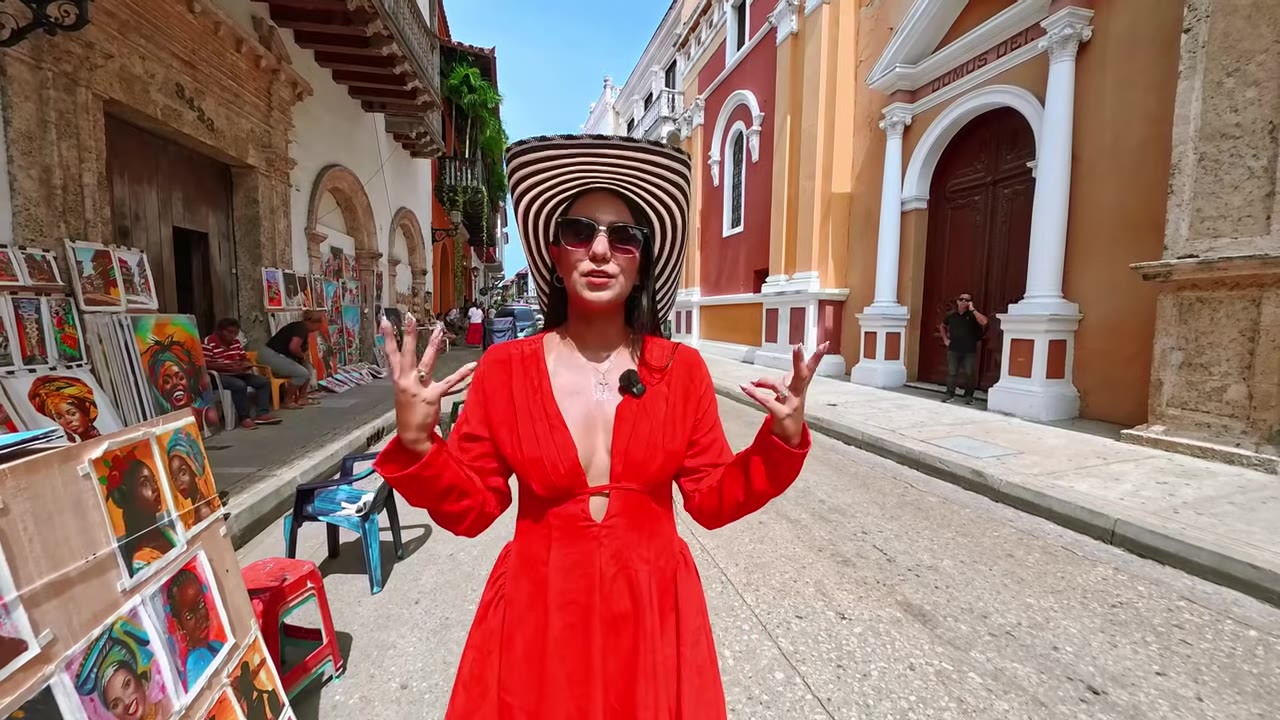
What Michelle Thielen’s journey shows
- She starts with Cartagena’s large welcome sign, a useful first orientation point for arriving visitors.
- She walks along the Camellón de los Mártires, the broad public promenade linking the historic center with Getsemaní.
- She stops at the Torre del Reloj area, Cartagena’s best-known gateway into the walled city.
- Her route introduces the contrast between postcard-ready colonial streets and the everyday life surrounding the tourist center.
- The video encourages a curious, observant visit rather than treating Cartagena as only a beach destination.
Watch Michelle Thielen’s Cartagena journey here, then use the planning advice below to shape your own route.
How to get to Cartagena and move around
Most international visitors arrive through Rafael Núñez International Airport, immediately north of the historic districts. It is much closer to the old city than many major-city airports, so a pre-arranged hotel transfer or an official taxi is the easiest first move, especially after dark or with luggage. The city’s official 2026 taxi minimum is COP 12,250; agree on the fare before departing when the vehicle is not using a meter.
Within Centro Histórico, San Diego and Getsemaní, walking is usually the best transport: streets are narrow, traffic moves slowly and the point is to notice small squares, churches and street life. For longer trips, including Bocagrande, Castillogrande, the airport and Castillo San Felipe, use a registered taxi, ride-hailing app where available, or TransCaribe. The official TransCaribe fare is COP 3,900 per ride in 2026.
Cartagena is also a natural pairing with Colombia’s inland highlights. If your trip continues south, see our Guatapé, Colombia Travel Guide for a very different landscape of reservoir views and colorful town streets.
Best time to visit Cartagena
Cartagena is hot year-round, so plan around rainfall, wind and crowds rather than expecting a cool season. The dry period generally runs from December through April, while the wetter season is from May through November. The national parks authority notes temperatures around 27°C to 30°C in the nearby Rosario and San Bernardo marine park throughout the year.
For a first visit focused on walking the old city, January through March is a dependable choice for drier weather, although it is also busy. April, May and November can offer a better balance of visitor numbers and hotel availability, with a real possibility of short heavy showers. If an islands day is important, keep one flexible day in your schedule: sea conditions can affect boat timing and the return hour is determined by maritime authorities and weather.
What Cartagena costs in 2026
Cartagena can suit a wide range of budgets, but the historic center and beach-front Bocagrande are generally the most expensive bases. The figures below are fixed public prices that were verifiable at the time of publication; hotel rooms, food, private transfers and island day trips vary too widely by season and operator to present as a single reliable price.
| Item | 2026 price | Notes |
|---|---|---|
| Castillo San Felipe de Barajas, full admission | COP 38,000 | Standard full-rate visitor ticket. |
| Castillo San Felipe, Colombian national admission | COP 33,000 | ID is required for the national rate. |
| Castillo San Felipe, reduced admission | COP 16,000 | For children aged 6–13, students and teachers with qualifying ID. |
| TransCaribe single ride | COP 3,900 | Official fare in force from January 23, 2026. |
| Official taxi minimum fare | COP 12,250 | Minimum city taxi fare for 2026. |
| Corales del Rosario y de San Bernardo National Park, San Bernardo sector entry | COP 11,000 | Boat, guide, insurance and other services are separate. |
Build a little contingency into your budget for hydration, taxis during the hottest part of the day and tips. For island excursions, ask for an itemized total before paying: clarify whether port taxes, park entry, accident insurance, lunch, snorkeling equipment and return transport are included.

Where to stay in Cartagena
Centro Histórico is the right choice for a first stay if you want colonial architecture, restaurants, museums and evening walks at your doorstep. It is beautiful and convenient, but accommodation can be expensive and nighttime noise is possible near popular plazas.
Getsemaní is ideal for travelers who prefer murals, smaller guesthouses, casual food and a more lived-in atmosphere. It remains walkable to the walled city, but choose a property on a quieter side street if sleep matters. Bocagrande makes sense for high-rise hotels, broad urban beaches and modern conveniences, though it feels less historic and requires rides or longer walks to reach the old city. Manga is a calmer local alternative, useful for longer stays.
What to do safely and respectfully
Give the historic center at least one full day. Enter through the Torre del Reloj, walk Plaza de los Coches and Plaza Santo Domingo, explore the quieter San Diego streets, then take in the walls close to sunset. Visit Castillo San Felipe early, before the heat intensifies, and wear shoes with grip for its uneven surfaces and tunnels.
For a sea day, choose an authorized boat operator departing from the La Bodeguita tourist pier. Colombia’s national parks service says boat trips from Cartagena to the protected islands take roughly one to two hours depending on vessel and route, and advises visitors to check capacity, wear a life jacket and make sure the boat is not overcrowded.
Use normal city precautions: carry only what you need, keep your phone out of sight in crowded areas, decline unsolicited “guides,” confirm prices before accepting services and do not wander alone on unfamiliar, poorly lit streets late at night. For more detailed planning, read our Cartagena Safety Guide: How to Avoid Tourist Scams and Risks. On the islands, do not touch coral, remove shells or leave litter; single-use plastics are prohibited in the national park.
Day-by-day (how to travel it yourself)
Day 1: Settle into the historic core. Start at the Torre del Reloj and Camellón de los Mártires, then wander Centro Histórico without a fixed checklist. Include the plazas, city walls and San Diego. Pause during the hottest early-afternoon period, then return for a sunset wall walk and dinner.
Day 2: Fortifications and Getsemaní. Visit Castillo San Felipe when it opens or as early as practical. Afterwards, continue to Getsemaní for Plaza de la Trinidad, mural-lined streets and a slower neighborhood lunch. Spend the evening there rather than trying to cross the entire city again.
Day 3: Choose beach city or islands. If you want easy logistics, spend the morning around Bocagrande and Castillogrande, understanding that these are city beaches rather than remote Caribbean islands. If clear water and snorkeling matter more, book an authorized Rosario Islands or Barú excursion and keep the following morning unscheduled in case changing sea conditions affect plans.
Day 4: Add depth. Revisit a favorite neighborhood, seek out a cultural museum or take a food-focused walk. Travelers continuing along Colombia’s Caribbean coast can use our Santa Marta Travel Guide and Tayrona National Park Guide to plan the next stage.
Frequently asked questions
How many days do I need in Cartagena?
Three full days cover the essential historic neighborhoods, Castillo San Felipe and one beach or islands day. Add a fourth day for a slower pace, museums or weather flexibility.
Is Getsemaní a good place for first-time visitors to stay?
Yes. It is walkable to the walled city and has a lively personality, but select accommodation carefully because streets near nightlife can be noisy.
Should I take cash to Cartagena?
Yes. Cards work at many hotels and established restaurants, but Colombian pesos are useful for taxis, small shops, markets, tips and incidental purchases. Avoid displaying large amounts of cash.
Are the Rosario Islands worth a day trip?
They can be, particularly if you want a break from city sightseeing. Choose a licensed operator, confirm every inclusion before booking, and remember that the experience depends heavily on weather, boat comfort and the itinerary.
Facts and prices verified in September 2026. Travel with Influencers is an independent fan/editorial guide, not affiliated with or endorsed by the creators featured. Watch and support the original creator: Michelle Thielen on YouTube.